
| Home | Music | Menu | Map | Reviews | Links | News | Contact | Photos | List |
Today is Saturday March 19, 2005
 |
Every Wednesday at 9PM | |
that the FUN continues...
With our 2003 AllGood ‘FallFilmFest’!!! FREE MOVIE !!! FREE POPCORN !!! FREE MOVIE !!! FREE POPCORN !!! FREE MOVIE !!! Every Wednesday from 9PM to 12 Midnight
Since, due to circumstances beyond our control, we were unable to show I AM TRYING TO BREAK YOUR HEART on the 24th, it will be shown this Wednesday October 1st.
| September 17 | BOWLING FOR COLUMBINE |
| September 24 | I AM TRYING TO BREAK YOUR HEART (A Film about WILCO)(postponed) |
| October 1 | I AM TRYING TO BREAK YOUR HEART (A Film about WILCO) |
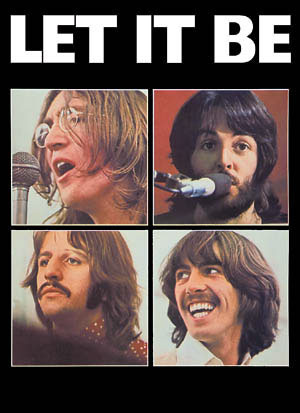
| October 8 | LET IT BE Celebrating John Lennons’ Birthday on 10/9, THIS precedes our 1st Annual Dallas BEATLEFEST! AllGood Cafe, Sun. Oct. 12. |
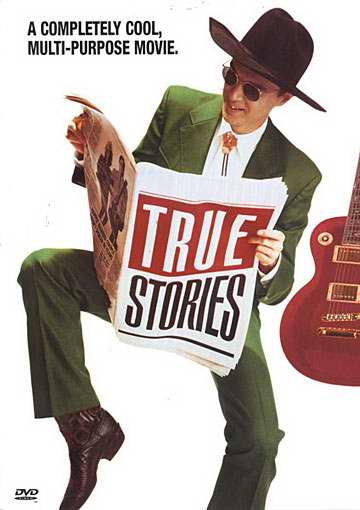
| October 15 | TRUE STORIES 20th Anniversary -filmed in Dallas by David Byrne |
| October 22 | DON’T LOOK BACK |
| October 29 | GIMME SHELTER |
| November 5 | NO MOVIE TONITE (7th Annual GRAM-FEST – details soon) |
| November 12 | THE LAST WALTZ |
The AllGood FALL FILM FESTIVAL is an alternative option for your Fall entertainment that combines the fun of great old movies in the company of friends and neighbors in a casual and upbeat setting. Our kitchen will close at 9PM, however Coffee, Desserts, Beer & Wine will be available as well as the FREE POPCORN !
MOVIES START BY 9:00PM unless otherwise noted.
This is a suggested MOVIE SCHEDULE & SUBJECT TO CHANGE...
CUSTOMER INPUT & FEEDBACK WILL BE CONSIDERED
AllGood Cafe thanks the Deep Ellum Film Festival for their support and providing our HUGE 9’X 12’ screen and Video Projection equipment. Donations ($5 suggested) will be accepted and will benefit the Deep Ellum Film Festival and their Charitable activities.
Please visit the de/f2 website for more information on their organization and activities.
Deep Ellum Film Festival October 22 thru 30
|
Wednesday, September 24 at 9PM | |
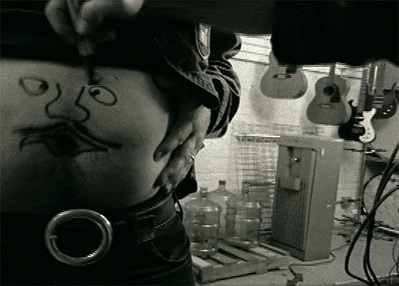
By now, the story has become music-industry lore—part cautionary tale, part barometer of the times. When Wilco, one of the most significant rock bands of its generation, turned in its brilliant fourth album, Yankee Hotel Foxtrot, to Reprise, it was anticipating the sort of vigorous, all-fronts marketing campaign only a major label can afford. Instead, the band was greeted with two weeks of ominous silence, finally broken by vague demands to smooth out the dense, sonically adventurous production. Victimized by the corporate wrangling at AOL Time Warner, Wilco suddenly found itself without any champions at Reprise and a completed album hanging in indefinite limbo. The story has a happy, deliciously ironic ending: Yankee Hotel Foxtrot was picked up by another Warner label (Nonesuch) for three times the money and made its debut high on the Billboard charts on the force of Wilco's fan base and universally ecstatic reviews. On hand with a 16mm B&W; camera to document the recording process, director/photographer Sam Jones came away with more than he bargained for in I Am Trying To Break Your Heart, a superb portrait of a band and an industry in flux. Though burdened by the weight of artistic and commercial expectations, the members of Wilco (singer-songwriter Jeff Tweedy, guitar and keyboard specialist Jay Bennett, bassist John Stirratt, multi-instrumentalist Leroy Bach, and new drummer Glenn Kotche) head into the studio feeling cautiously optimistic. Granted an $85,000 budget and artistic freedom, they're allowed to record the album in the relaxed environs of a private loft, away from the prying eyes and ears of label suits and producers. But as the meticulous recording and fine-tuning wears on, and the pressure to deliver starts to mount, a creative rift between the band's two main collaborators, Tweedy and Bennett, grows increasingly apparent, leading eventually to Bennett's acrimonious dismissal. Though he gets juicy post-mortem interviews with both parties—Tweedy cites Bennett's neediness, while Bennett claims Tweedy wanted his band back—Jones' camera was not present for the actual breaking point. But in a key scene, their frayed relationship shows in a scrap over a minor (though sublime) mixing transition into "Heavy Metal Drummer," one of presumably hundreds of little chips in the armor. That their separation comes over creative ambition (rather than, say, a pool of vomit) speaks both to the band's integrity and to the ultimate focus of Jones' documentary. Historic distractions aside, I Am Trying To Break Your Heart is first and foremost about the art and joy of making music, with extensive and crisply recorded footage devoted to songs in various stages of development and deconstruction. Stripped of the layers of discord that alienated Reprise executives, the opening track becomes a lovely acoustic folk song; with dual electric guitars, "Kamera" sounds more like a raucous outtake from 1995's A.M. than the plaintive version on the finished album. Above all, the documentary is a reminder that the small miracles of a great record come from artistic devotion and agonizing rigor, even if the sum winds up falling on tin ears. — Scott Tobias The Onion
|
Wednesday, October 8 at 9PM | |
|
Wednesday, October 15 at 9PM | |

|
Wednesday, September 22 at 9PM | |
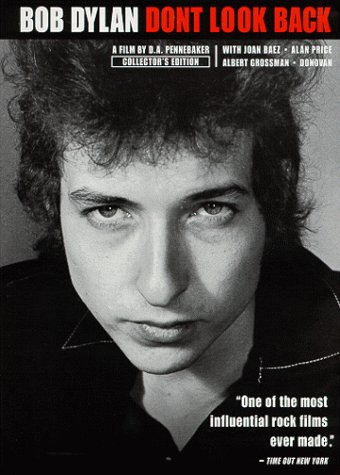
A raucous and intimate road movie of Bob Dylan's 1965 tour of England, BOB DYLAN - DON'T LOOK BACK may be perhaps the most influential rock star documentary of all time. D.A. Pennebaker's trademark cinema verité approach, with its comprehensive perspective, captures the paradoxical Dylan in alternating moments of confrontational belligerence and contemplative repose, all within the framework of the pop culture hurricane of one of the most publicized concert tours of the mid-1960s. Mobbed by frenzied fans and stalked by confounded journalists and music critics unable to penetrate his carefully evasive yet antagonistic persona, Dylan takes refuge with Joan Baez, his folk contemporary, and Albert Grossman, his juggernaut manager. As the tour progresses, a pattern emerges from Dylan's modes of expression, offering a glimpse of what would come to be a constant in his career: his perpetual redefinition of himself. Displaying the enigmatic performer's roles as both folk artist heir apparent to the Woody Guthrie throne and electric guitar rock pioneer who turned the Beatles on to pot, DON'T LOOK BACK preserves not only Dylan's musical genius but his inimitable, vital, and profound defiance of definition.
|
Wednesday, October 29 at 9PM | |
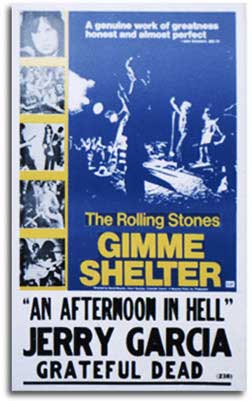
The landmark documentary about the tragically ill-fated Rolling Stones free concert at Altamont Speedway on December 6, 1969. Only four months earlier, Woodstock defined the Love Generation; now it lay in ruins on a desolate racetrack six miles outside of San Francisco.
Before an estimated crowd of 300,000 people, the Stones headlined a free concert featuring Tina Turner, The Jefferson Airplane, The Flying Burrito Brothers and others. Concerned about security, the Stones askd members of outlaw biker gang The Hell's Angels to help maintain order. Instead, an atmosphere of fear and dread arose, leading ultimately to the stabbing death of a fan. What began as a flower-power love-in had degenerated into a near riot; frightened, confused faces wondering how the Love Generation could, in one swift, cold-blooded slash, became a generation of disillusionment and disappointment.
December 6, 1969: the day the Sixties died.
"One of the most important films of the year." - NEWSDAY, 1970
"A shocker. Pouting, bumping, crowing into the microphone, Jagger is completely mesmerizing." - DAILY NEWS, 1970
"One of the most powerful films ever made. I can only implore you to see it." - MORNING TELEGRAPH, 1970
"Vivid, scary, revealing, hypertense." - PLAYBOY, 1970
"… there's no way to escape the image on the screen, nor deny its truth. We blew it at Altamont; 'Gimme Shelter' lets us watch ourselves blowing it, and makes us understand how and why. It's a lot harder that it looks to make a film as good as this one." - ROLLING STONE, 1970
"The most disturbing, powerful, and inciteful moments to be recorded on film of the young generation raised on rock." - NEWSWEEK, 1970
"… one of the year's most important films. A mesmerizing portrait of the love and drug generation." - WALL ST. JOURNAL, 1970
"A mind blowing trip across young America." - Jeffrey Lyons, 1970
"A stunning film, a sensational piece of filmmaking, a landmark." - HOLLYWOOD REPORTER, 1970
|
Wednesday, November 12 at 9PM | |
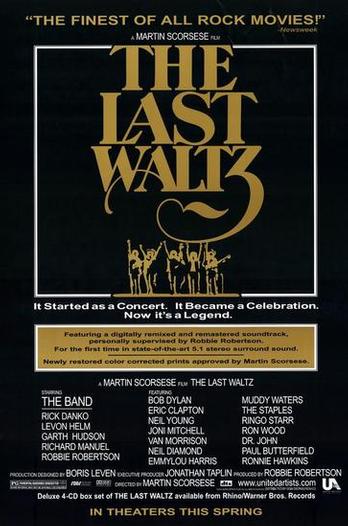
Martin Scorsese's 1978 film of The Band's all-star farewell concert, "The Last Waltz," is the greatest rock concert movie ever made - and maybe the best rock movie, period. Now being re-released with restored picture and sound, for the original concert's 25th anniversary, "The Last Waltz" is a movie that exactly fits the words of Bob Dylan, who helps close the show with "Forever Young."
This movie - and the event it records with such rapture and passion - is forever young, despite the passage of 25 years since The Band (lead guitarist and backing vocalist Robbie Robertson, bassist/singer Rick Danko, keyboardist/singer Richard Manuel, organist/horn player Garth Hudson and drummer/lead singer Levon Helm) took the stage at San Francisco's Winterland Theater for what was billed as their farewell concert "with friends."
In this intoxicating movie - which has pungent Scorsese-led interviews with the lazily reminiscing Band members interspersed with their hard-rocking stage collaborations with Dylan, Neil Young, Joni Mitchell, Muddy Waters and many others - sight and sound play together magically, seamlessly. Scorsese's multiple cameras don't just capture the show, they enhance and magnify it, merge with it.
The film encapsulates a whole era in one bounteous Thanksgiving evening, with one great number after another: Dylan, dandy-hatted and fuzzy-cheeked, raging his way through "Baby Let Me Follow You Down" and plaintively keening "Forever Young"; Mitchell, ironic, cool and sweet as she trades sexually charged glances with Robertson on "Coyote"; Muddy Waters growling furiously though "Mannish Boy"; and Van Morrison summing up the essence of every seedy neighborhood bar between here and Dublin on "Caravan."
The Band members run through their own roots-rock repertoire ("Up on Cripple Creek," "The Night They Drove Old Dixie Down") - and serve as super backup band for their guests, including Eric Clapton, Neil Diamond, Dr. John, Paul Butterfield and their very first front man and employer, Ronnie Hawkins (for whom they toured as "The Hawks").
Despite its age, "Last Waltz" always seems to be happening now, on the instant. Scorsese, who worked on 1970's "Woodstock" (he edited the Sly and the Family Stone numbers), planned rigorously, matching every shot and move to the songs while leaving space for accidents. His main cinematographer was Michael Chapman ("Taxi Driver"). Manning the seven additional cameras were a stellar crew that included legendary Hungarians Laszlo Kovacs ("Easy Rider") and Vilmos Szigmond ("Deliverance"). Yet the movie never seems overplanned. Because Scorsese keeps his cameras focused on stage and not on the audience, we always seem to be with the performers, part of their special community.
The Band members kept their promise and never reunited on stage - shunning the stardom that "The Last Waltz" conferred on them. The movie reveals what top camera subjects they all were, especially Robertson (who had the offhand sexiness of a Brad Pitt) and Helm (who, unlike Robertson, sustained a later movie acting career).
The farewell concert is a grand finale with one showstopper after another, but the movie has an untoppable high point: a number that, oddly enough, wasn't part of the concert - The Band's studio rendition of their signature song, "The Weight," accompanied by that consummate gospel group The Staples.
Whenever I show "The Last Waltz" to film classes, I always stop the movie after "The Weight," rewind and play it again so that the audience can savor again that earthy rhapsodic beat, those gorgeous sliding camera moves to Danko and Helm as they begin their verses, Pop Staples' mellow purr on "Go down, Moses," and the impassioned heart-stopping cries of Mavis Staples. Everything comes together here: especially the whole melding of poor black and poor white country Southern subcultures that is rock 'n' roll - right up to the climax, when the music stops, Mavis crinkles up her face and, transported by the moment, whispers: "Beautiful!"
Oh, yeah. - Michael Wilmington, Chicago Tribune
Punk was looming as the new sound, and memories of the Woodstock-era rock aristocracy were fading. On Thanksgiving Day in 1976, "The Last Waltz" was to be the last hurrah of the old guard -- the final concert by one of the most revered rock ensembles of its time, The Band.
Now, 25 years after that performance in San Francisco, Robbie Robertson speaks fondly of a band and an era that in his opinion still haven't been topped.
"To this day that film is unsurpassed, the talent on that stage is unsurpassed," he says in an interview at the South by Southwest Music Conference, where he has been busy crowing about what it all meant to industry tastemakers and fans.
"I don't want to be one of those people saying, `Remember when things were better?' But somebody, please, step up! Because nobody has."
The occasion for all the bravado is the theatrical re-release of "The Last Waltz," the Martin Scorsese-directed movie of The Band's farewell concert (it opens April 19 in Chicago); the first-time availability on May 7 of a DVD version featuring new interviews and additional footage, and the release on April 16 of a four-CD box set that augments the original 30-song soundtrack with 24 previously unreleased rehearsals and performances.
"The Last Waltz" was hailed as the greatest rock 'n' roll movie ever made, and its stature has only increased, providing a snapshot of legends and cult figures from the quarter-century when blues, country and pop merged into rock, as epitomized by The Band's rhythm-and-soul eclecticism. Here were Bob Dylan, Muddy Waters, Van Morrison, Joni Mitchell, Eric Clapton, Neil Diamond, Neil Young, Ringo Starr, Ron Wood, Ronnie Hawkins and Paul Butterfield sharing a stage with The Band's Robertson, Levon Helm, Richard Manuel, Garth Hudson and Rick Danko on a night that would be captured on film by Scorsese, one of America's greatest filmmakers.
But for a movie intended as a celebration, "The Last Waltz" now also can be seen as something of a wake: a monument to self-importance that virtually excludes the audience, a look backstage at the fissures and tensions that had begun to consume The Band, and a portrait of five men walking their separate ways after a divorce that only one of them (Robertson) had fully endorsed.
The Band today is in tatters. Danko died in 1999 and Manuel hanged himself in 1986, victims of the road life Robertson had come to loathe. Helm has turned into Robertson's bitter enemy, in a dispute over songwriting credits. Robertson, meanwhile, has steadfastly refused to rejoin the remaining members of The Band for live performances, even at Dylan's 30th anniversary party in New York in 1993. In the movie, he claims to be sickened by the decadence of touring life after 16 years in a rock 'n' roll band, and the "Waltz" is his way of waving it goodbye. He hasn't looked back since.
"I understand why the Eagles get together and say, `I really don't like the rest of you guys, but the money is too good to pass up because next year nobody may be offering me that,' but this isn't about prostitution for me," Robertson says of his ongoing indifference to a Band reunion, even for a potential big-bucks tour with Dylan.
At 57, he is a dapper presence in a suit jacket; the face is puffier, but the jet-black hair and hooded eyes still smolder like they did in "The Last Waltz," the movie that opened the door to his career in Hollywood.
He is currently an executive at the entertainment giant DreamWorks and has scored numerous Hollywood movies, starred in one ("Carny"), and released four solo albums.
"I'm really lucky because I found myself in a position where I can do whatever I want to do," he says. "I can make records, produce records, make movies, or I can do nothing. I'm not a slave to the dollar."
Helm claims the opposite in his 1993 autobiography, "This Wheel's On Fire," in which he claims that Robertson ripped off his bandmates by claiming the lion's share of songwriting credits in The Band (he could not be reached for an interview): "I even confronted Robbie over this issue during this era," Helm wrote. "... I cautioned that most so-called business moves had (destroyed) a lot of great bands and killed off whatever music was left in them. I told Robbie that The Band was supposed to be partners ... Well, it never quite worked out that way. We stayed in the divide and conquer mode."
Robertson claims not to have read Helm's book, but he nonetheless responds to his former bandmate's accusation with a mixture of empathy and indignation: "I know that Levon's had a tough time, he's had health problems, but it's not my fault and I wish him the best. To say that it was an issue (while they were together in The Band) is just nonsense, utter nonsense, after all these years. Who did the work? I tried, I begged Levon to write songs or help me write songs -- all the guys. I always encouraged everybody to write. You can't make somebody do what they don't want to do or can't do, and he's not a songwriter.
"With The Band he started to write one song, `Strawberry Wine,' the whole time and couldn't finish it, and I helped him finish it. And there were some other songs that I wrote and he was there when I was writing them, and just because he was being supportive, I gave him credit on a couple of songs. He didn't write one note, one word, nothing. What he's saying now is the result of somebody thinking about their financial problems. I wrote these songs and then 20 or 30 years later somebody comes back and says he wrote the songs? It never came up back then, and it's preposterous that it's coming up now."
Viewers catch a whiff of the acrimony that began to tear The Band apart in its waning years during the interviews sprinkled throughout "The Last Waltz."
Robertson dominates the screen time; he stands at center stage through most of the songs, and offstage he is clearly the most eager to respond to Scorsese's questions. He isn't just a participant in the film, he is its catalyst; it was Robertson who enlisted Scorsese to make the film six weeks before the concert and later became the director's roommate in Hollywood while the movie was being readied for release in 1978. The rest of The Band were unenthusiastic participants at best. They slouch or mumble through the interviews, and Helm is sometimes downright hostile, his blue eyes like knives piercing the camera lens. He is even more unsparing in his autobiography:
"As far as I was concerned, the movie was a disaster. ... For two hours (at a screening) we watched as the camera focused almost exclusively on Robbie Robertson, long and loving close-ups of his heavily made-up face and expensive haircut. The film was edited so it looked like Robbie was conducting the band with expansive waves of his guitar neck. The muscles on his neck stood out like cords when he sang so powerfully into his switched-off microphone."
Helm claims that he and other band members never received a royalty from the movie. "Today people tell me all the time how much they loved `The Last Waltz,'" he writes. "I try to thank them politely and usually refrain from mentioning that for me it was a real scandal."
It's a shame, because Helm sings his heart out in the movie, particularly his moving performance of "The Night They Drove Old Dixie Down." His yodeling and drum volleys on "Up on Cripple Creek" are spine-chilling in their intensity. The Band attacks its world-class batch of original songs with gusto, and affirms for the last time what made them great: Robertson's stiletto guitar incisions; Hudson's Mad Professor whirlwind of keyboards, pump organ and saxophone; Danko's dancing bass lines and high, lonesome vocals; Manuel's Ray Charles-like soul inflections; Helm's growling baritone and painterly drum grooves. Scorsese scripted the camera angles with Robertson as if directing an elaborate play (the DVD shows instructions such as "general amber lighting on band on downbeat" plotted for every turn in the music), and the stunning lighting effects and crispness of the stationary-camera 35-mm. images set a standard for rock movies that still stands (previously most concert films had been shot with shaky hand-held 16-mm. cameras).
Scorsese's editing ensures a galvanizing viewing experience that, by most accounts, surpasses the actual event, which was marred by a number of indifferent or ragged performances. But the heart of the performance is undeniable: Waters' growling "Mannish Boy"; the doomed Manuel howling, "How in the world do ya get to heaven," on "The Shape In" and summoning tears with a wrenching "Tura Lura Lural (That's an Irish Lullaby)"; Morrison's "Caravan," punctuated by Rockettes-like kicks from the normally reserved Irishman; Dylan's anthemic roar during "Forever Young"; the Robertson-Clapton guitar duel on "Further On Up the Road"; the Staple Singers trading fevered hosannas with Danko and Helm on "The Weight" (one of two postscript performances shot on a sound stage).
Yet the movie is also oddly distant and cool. There are few pictures of the audience, which paid a then-scandalous $25 (more than triple the going rate) to attend. Scorsese's cameras instead train on the musicians and cast them as beautifully lit rock gods looking down on their anonymous worshipers. There was also an attempt to sanitize the event's reality: the cocaine powdering one of Neil Young's nostrils was edited out, and some of The Band's more ragged instrumentals were overdubbed. And then there is the air of drug-induced burn-out and spiritual exhaustion that hangs over the various members of The Band -- except Robertson. Robertson is a man with a future, a man with plans, who would go on to preside over projects such as "The Last Waltz" reissues, and its inevitable re-canonization as The Greatest Rock Movie Ever Made.
It just might be, and Robertson remains a brilliant songwriter and guitarist whose best songs -- "The Weight," "The Night They Drove Old Dixie Down," "Stage Fright" -- tower over the last half-century.
But for his former bandmates, their future is typified by Danko, who when asked by Scorsese what he plans to do next, mumbles a reply, tucks his shaggy head inside his hat, and sinks into the darkness while a mournful song plays from his forthcoming solo album. In the movie, Robertson calls the touring band "a goddamn impossible way of life" and "The Last Waltz" would be his doorway to a different, more lucrative and comfortable world. But for his former band members, the "Waltz" was just a pause in the endless grind. Greg Kot - Chicago Tribune
|
|
|
MORE ANNOUNCEMENTS EXPECTED VERY SOON.
KEEP ON RED ALERT!!!!
and, you know...
It's  !!!
!!!
Mail questions to
txmuzik@swbell.net
Mail questions about the website itself to
marvin@sundream.com